Sun-faded, snow wash, sand wash, garment wash and controlled distressing — the finishes that make a heavyweight piece look lived-in rather than brand new. Run at our long-term partner wash house, on 50 pieces per style.
The same 420 GSM hoodie can leave the line looking like a uniform or like something a brand spent a season developing. The wash is usually the difference.
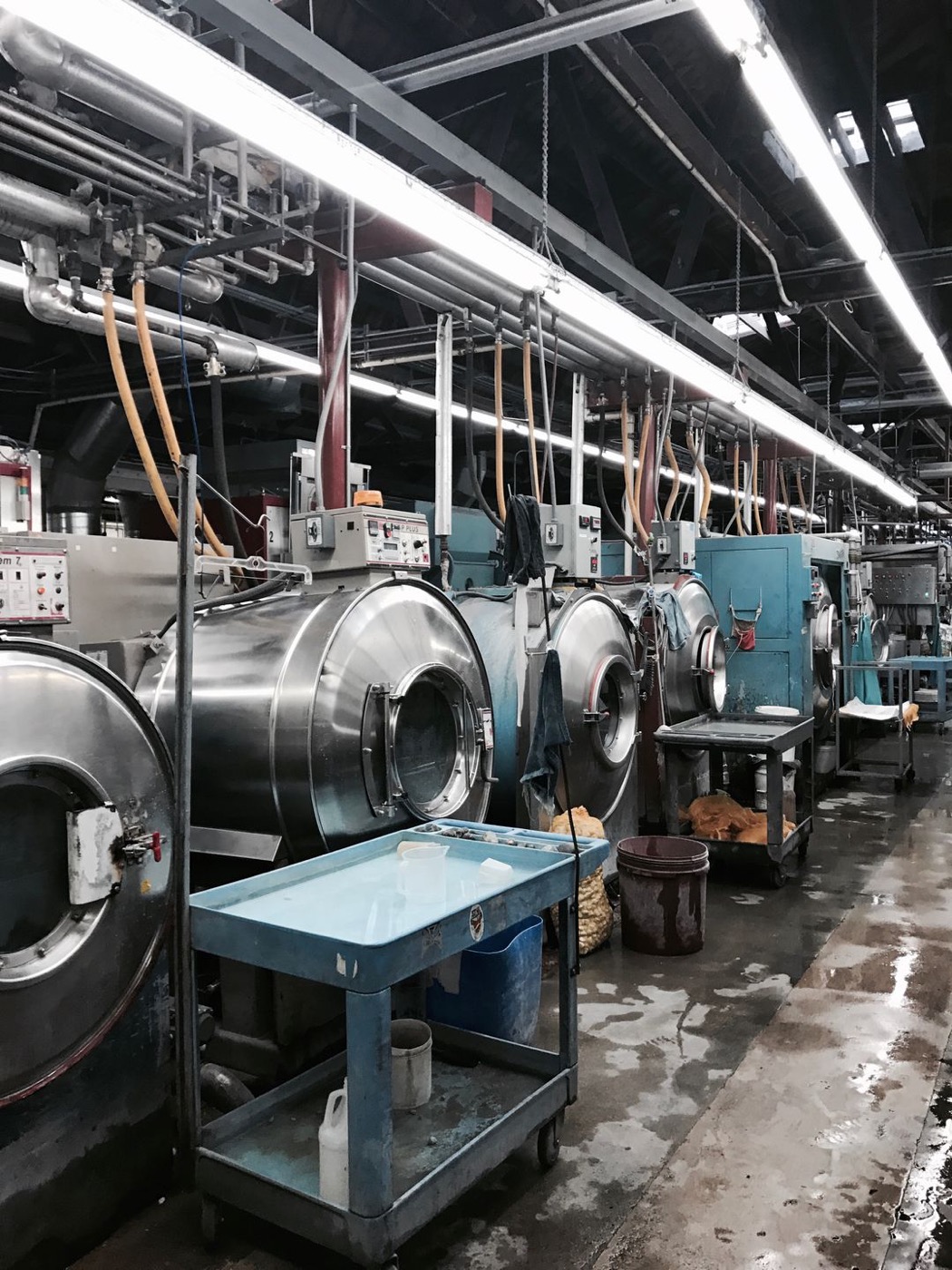
Garment washing is a separate heavy process — it needs dedicated machinery, water treatment and environmental permits, so like most apparel factories we run it through a long-term partner wash house rather than claiming it in-house. We manage the specification, the sampling and the QC; they run the drums. You get a written wash recipe against your style, so the tenth reorder still looks like the first.
Request A QuoteThe most requested streetwear finish — a soft, uneven fade that reads as genuinely sun-worn rather than printed on. Depth of fade is set at sampling and recorded for reorders.

Soft all-over fade with natural tonal variation across the back and shoulders

Black fading through to grey, strongest at the centre panel

Fade concentrated at sleeves and hem for a worn-in gradient

Heavyweight fleece taken through a full sun-fade cycle
Different drums, chemistry and cycle lengths produce very different hand-feel. All of these can be run on knit fleece, terry and jersey.

High-contrast mottled surface on 380 GSM fleece

Softened, matte surface with a dry hand-feel — 370 GSM zip hoodie

Standard garment wash on a 425 GSM sweatsuit — softens and pre-shrinks

Garment-washed 250 GSM cotton tee, relaxed drape

How ribbing takes the wash — the detail buyers check first
Controlled damage, applied by hand to a signed-off reference. The point is repeatability: distressing that looks random but lands in the same place on every piece.

Controlled holes and thinning, placed to an approved reference

Abrasion, whiskering and worn edges on denim pieces

Frayed, aged embroidery for a vintage finish
The most washed category — 280-500 GSM fleece.
Matched wash across jacket and pants.
Garment-washed jersey for a relaxed drape.
Wash matched to the matching top.
Denim abrasion and worn-edge finishes.
One wash standard across an entire drop.
Chemistry, cycle and load size are recorded against your style — not left in an operator's memory.
We keep the signed-off sample so bulk is judged against a physical standard, not a photo.
Wash changes colour, hand-feel and size. You approve a washed sample, never an unwashed one.
Patterns are cut oversized to the tested shrinkage rate, so the finished garment hits your spec after washing — not before.
A photo, or better, a garment whose wash you want matched.
The wash house runs trials on your actual fabric — fade depth varies by fibre and dye.
You receive a fully washed sample to judge colour, hand-feel and fit.
On approval the recipe is written up and filed against your style.
Bulk runs in batches against the approved reference, with checks between loads.
Every piece is inspected for wash consistency and residual damage before packing.
No — and we would be cautious of any garment factory that claims to. Washing is a separate heavy process requiring dedicated drums, water treatment and environmental permits. We run it through a long-term partner wash house while managing the specification, sampling and quality control ourselves. You deal with us throughout; we are accountable for the result.
Sun-faded and tonal fading, snow wash, sand wash, standard garment wash, and controlled distressing including holes, abrasion and worn edges. Finishes can be combined — for example a sand wash followed by hand distressing at the cuffs and hem.
Not identical, and that is the nature of washing — a hand-distressed, sun-faded piece is meant to vary slightly. What we control is the range: bulk is judged against your approved reference sample and checked between batches so variation stays within an acceptable band rather than drifting.
Yes. Washing shrinks fabric, which is why we cut patterns oversized to the tested shrinkage rate for your specific fabric. The finished measurements you approve are the post-wash measurements — that is the only number that matters.
Yes, and we strongly recommend it. Wash changes colour, hand-feel and fit all at once, so an unwashed sample tells you very little about the finished product. Wash sampling runs alongside our standard 7-12 day sample lead time.
Our standard MOQ of 50 pieces per style and colorway applies to washed pieces as well. Note that heavily varied finishes read better across a larger run, simply because buyers see the intended range rather than two or three outliers.
Yes — sending a physical reference is the most reliable brief. The wash house trials on your actual fabric, since the same recipe lands differently on different fibres, dyes and knit constructions.
Tell us your fabric, fit, quantity and timeline — we'll reply with pricing and a clear production plan, usually within one business day.
Fields marked * are required.
 Huaxing